Fruit Trees
Showing posts with label dwarf fruit trees. Show all posts

Dwarf Navelina Orange Fruit Tree - Big Crop, Best taste

There are Supermarket Oranges and then there are backyard grown, big cropping, sweet and juicy, Seedless, Full Tasting, Fresh room filling aroma, Magical Texture and "to live for" Oranges that will give you enough fruit to share with friends and family. The grafted Dwarf Navelina Orange tree is exactly this. Show us a backyard or a sunny patio and Daleys will say you need a Dwarf Navelina Orange tree growing right there.


Transcript from Orange Tree Video

This is one of my absolute favourite
citrus this is a Navelina orange and I
adore this citrus because it's a great
sized tree so you can see behind me it's
only a small compact tree and with the
Navelina it's actually the scion that
keeps it small so although it's grafted
onto trifoliata which is your regular
citrus rootstock it only grows a couple
of metres tall so it's a dwarf tree and
it's wide and broad it crops beautifully
and it has these absolutely deliciously
sweet juicy seedless oranges and I just
love it so it's one of my favorite
oranges in my orchard I've actually planted
more trees cause this one is so
productive so it's a early navel it
comes off in about May and like all
citrus it's a heavy feeder so it likes
regular nutrition some trace elements
every now and then lots of water when
it's fruiting and regular water
throughout the year and apart from that
its really easy to grow so you've got
no excuse not to have beautiful oranges
in your garden so get out there plant a
lovely navel orange and in May you'll be 
picking these beautiful home grown fruit

Video Bare Root Fruit Trees

See what Bare Root Fruit Trees look like, how they are transported and the specific points on these "Sticks" that you need to understand. A whole orchard can be created in 1 compact order.

Detailed/Pictured List of Bare Root Plants that will be sent in June/July
Compact Page with every Bare Root Plant

In the video we show you how they save space making them perfect for mail order and offer 50% off freight compared to buying these plants as potted plants outside of Winter.


Buy: Dwarf RedLove Apple Fruit Tree for sale (Red Love)


**New** Dwarf RedLove Apple Tree has a STUNNING red coloured flesh. The tree is ready to be mail ordered to your door now while it is dormant. (bare root: It is sent with no soil and no leaves ).

Tree features include: Blackspot and powdery mildew resistant. In terms of pollination it will be fine with a Granny Smith Apple Tree or Pink lady Apple Tree. Usually only grows between 1 and 2 meters. The climate requirements are Cool Temperate to Warm Temperate. So only the colder parts of QLD & NSW and many places throughout VIC and SA.

What is more this apple has been developed using all natural cross-pollination techniques just like all the apples we have been enjoying for hundreds of years. Basically you choose certain apple trees to grow close together and pollinate each other. You then take these seeds and grow an apple tree in the hope of finding something very special. In this case the RedLove Apple Tree.

Learn/Buy here: https://www.daleysfruit.com.au/Dwarf-Apple-Redlove-Malus-domestica.htm

Blueberry Plant Pollination Chart - Which Blueberry variety is right for my climate?


Blueberry Plants Pollination Chart

How many Blueberries Plants do I need? Answer: 2 or more is going to maximise pollination and give you more berries. Many varieties can pollinate themselves ( See the yellow star in the picture for these varieties ) but a fruit this tasty yet expensive in shops is well worth growing in pots or in the ground and can be very rewarding. 2 or more will give better fruit set just as long as they can pollinate each other or have a green tick in this chart.

Which varieties will suit? Are you A) Subtropical, B) Warm Temperate - Subtropical or C) Cool Temperate? After you put yourself in one of these categories use the chart to narrow down the varieties to choose from. For example are you in Sunny Coastal NSW and therefore Subtropical. Then Temperate varieties like Blue Rose or Denise are not for you but Sharpblue and Biloxi are.
Blueberry Fruit Tree Pack

Dwarf Plum Gulf Gold Fruit Tree for Sale


Dwarf Plum - Gulf Gold Fruit Tree is our favourite of all the stone fruit. Yes we know it's a big call. It is Low Chill, (350 Chill Hours) excellent juicy flavour and doesn't seem to attract as many fruit fly as other varieties and fills the branches when it crops. Dwarf Gulf Golds can fruit by themselves but to get a better crop you can match them with a Gulf Ruby Plum Tree. We can't say enough good things about this variety and have done lots of videos on it over the years.

Dwarf Brown Fig Tree -Small with Sweet delicious Figs ( Dwarf Fruit Trees)


The Dwarf Brown Fig Tree is small and can stay under 1m in height yet it still produces these lovely and delicious figs that you will love. Yes they can be grown in pots or if you have a tiny space in your backyard that gets some Sun it is a plant that will not take over that position but just stay small.

The Dwarf Brown Fig Tree is for sale from Daleys Fruit Tree Nursery and you can buy the Dwarf Brown Fig

The Video featured at the end of this video is the Purple Dwarf Irwin Mango Fruit Tree
Dwarf Brown Fig Tree Fruit Tree for Sale

Transcript

Very nice, very sweet.
That's sweet.
It's Summer here, the middle of summer and we are just picking the first of our Figs.
So this Fig is our Dwarf Brown Fig and you can see it has this beautiful light pale skin.
and this lovely pale flesh as well and it's a really sweet fig this so it's delicious eaten fresh off the tree a really lovely fruit.
That's very nice.
and the Dwarf Brown Fig only grows to about 2-3m.
So if you are in a small urban block or only have a little space for a Fig this Dwarf Brown Fig is a great choice for you.
It's also perfect for growing in pots so if you are growing it in a container use a really good quality potting mix. 
and keep the moisture up to it during the growing Season.
So while it's in full leaf and fruiting and growing you will need to maintain even moisture in your pot.
In the ground give it a Sunny position and good drainage and you will be picking these beautiful Figs in about 2 years.
What did you think of that?
It's quite sweet isn't it.
These are our stock plants so I just wanted to show you how we grow these. There are a lot of people who are patiently waiting for the Dwarf Brown Fig and with slow growing plants such as these we take a batch of cuttings and then we grow them on to have established stock trees.
So from these potted plants and there is about 30 or 40 here we're taking cuttings and it's the cuttings from these plants which we will sell to you.
So we take these at 2 times during the year we take them during the growing Season so during the Summer months while they are actively growing we take Softwood cuttings and then again in the Winter we take Hardwood cuttings and they're done as deciduous cuttings we root and then grow on in the Spring.
Mmmm yeah
Nice?
mmmm

Daleys Biodome 100+ Dwarf Fruit Trees in a Small Space


100's of Fruit Tree varieties grown in a small space in Daleys Biodome. Take a look in Kyogle when you visit Daleys Nursery. We show you how much it has changed in 15 months and the methods we use to keep usually large trees small and how to get them to fruit earlier.
Mentioned in Video: Cincturing using the Dwarfing Tool

Strawberry Guava Fruit Tree for Sale - Golf Ball sized Red Fruit

Strawberry Guava Fruit Tree for Sale
Our strawberry guava fruit tree has golf ball sized red guavas that taste like strawberries or the typical taste that we expect when eating something red. The seeds skin and flesh are all edible. Not the biggest fruit of the guava varieties but you get this one because of the great crop, lovely taste and small size of the shrub in limited spaced backyards. They grow fastest in tropical climates where they can be invasive due to perfect conditions and birds spreading the seeds so best to be responsible and net the fruit from birds and fruit fly. However they are very versatile where they can even handle a frost when grown at altitude or in warm temperate to subtropical climates where they won't be invasive. You can even roast and grind the seeds as a coffee substitute.

Planting Mango Seedlines to be used as Rootstocks for Grafted Mango Fruit Trees

We are excited getting our mango seeds down for the season. These seeds will later be used as rootstocks for grafted mango fruit trees
Aliya planting Mango Seeds

Close up of mango seeds after just being planted


I have noticed in the fresh juice stores just this month the Acerola cherry as a new ingredient. Word of its high vitamin C and other health benefits are making it to OZ finally. 180mL of Acerola = 14L of orange juice in vitamin C. We use the variety Florida sweet as we find it has a more cherry like flavour than other more sour varieties. It is also commonly used in the Japanese practice of bonsai so great for small pots or if grown in the ground it can get 2-4 metres in good conditions. If you don't have long cold winters then the subtropical Acerola Florida sweet cherry fruit tree is worth a try. Self pollinating so you only need one.
Acerola Flordia Sweet Cherry Fruit Tree

Our Dwarf Peach Fruit Tree

Our Dwarf peach tree is 80cm tall but produces these massive peaches about 9cm in diameter. We have a video and more information on our dwarf peach tree web page here

Dwarfing Tool: Cincturing or Girdling Fruit Trees | Flower & Fruiting in more Climates


Fruit Outside Seasonal Times

Girdling can force fruiting outside of the normal seasonal fruiting time of the year . Also trees that tend to be biennial fruiters, For example you can cincturing separate branches alternately every year will ensure one gets fruit every year.

How Cincturing Works

Cincturing temporarily stops the flow of photosynthesised sugars to the roots. This forces the cinctured branch into producing flowers. At the same time the roots are being deprived temporarily of food and hence root growth slows which also slows a vigorous trees growth. The ideal way to get the best advantage from cincturing is to alternate each year a main branch of ones tree.

Tastes Like Rock Melon & stays small & Bushy The Pepino Kendall Gold Fruit Tree

It tastes like a Rock Melon stays very small and bushy. It is the Pepino Kendall Gold Fruit Tree variety. $9.90ea or 2+@5.00ea We have lots ready to send.

Dwarf Mulberry Tree - The Black Variety - Kids Love them


Luna finding some late season fruit on our Dwarf Mulberry Tree Black Variety. With regular pruning you can get several crops each year and also keep them under 1 metre.  #mulberry #dwarffruittrees

Grafted Dwarf Plum Tree - Gulf Gold Fruit Tree - Ripens @ Christmas Time


What is the best fruit tree for Christmas? The Dwarf Gulf Gold Plum Tree and this is why.

It is self pollinating and a low chill plum tree that is great for backyards. So if you live in a Subtropical climate and don't get those months of freezing weather or you live near the ocean and don't get heavy frosts then this is the plum tree for you as it only needs about 200 chill hours.

Why Christmas? Well this Grafted Plum Tree produces it's golden plums just before Christmas. Why Is it the best. Because of the taste and because of the amount of flesh on each fruit. This is because of it's very tiny seed.

Every staff member at Daleys Fruit Tree Nursery agrees this is the Champion of plum trees that we grow and the one that gives us the most success.

Buy it now : http://www.daleysfruit.com.au/buy/plum-gulfgold-tree.htm
Learn More about chill hours

Tea Production a Home


HOW TO MAKE YOUR OWN TEA AT HOME

For personal use you will need about 4 bushes for the average family of tea drinkers. The bushes need to be planted in a well-drained area. Most soil types will do though they prefer slightly acidic soil. They will tolerate full sun of partial shade, not full shade. Tea likes plenty of water, but will not tolerate standing in water. Fertilize with a hight nitrogen fertiliser, in October and February.

Prune your bushes so that they spread out to form a flattop hedge. Prune in February for the first 3 years then every year in July if in a no frost area, or when the danger of frost has passed if you are in a frost prone area. Prune to about 200mm the first year, 300mm in the second year, 400mm in the third year, when you should be able to get your first crop. Pluck the first two or three leaves and the bud every time they are 5-8cm above the pruning mark at first then use the plucking mark as a guide. You should let your bushes gain height during the plucking season so that they reach a comfortable working height by the end of the season, around early July in the Northern New South Wales and South East Queensland area.

When your bushes reach maturity, in 5-6 years prune out the ‘crows feet’ every year. Then every 5 years give them a deep prune down to 30-40 cm from the ground. Make clean cuts with your pruning.

PLUCKING
You should be able to pluck your 2-3 leaves and bud by about October and then every 2-3 weeks decreasing to about every week in December – January – February – March – April, then extending to 2-3 weeks by June – July. When plucking pull off and discard any old dark green leaf that protrude above your plucking table. You only need the fresh light green new growth to make tea.

PROCESSING
Having plucked your 2-3 leaves and bud, you are now ready to make tea. When your bushes are mature you should get about 1 kilo or more from your four bushes. Thinly spread your leaf out on a withering table which you can make by stretching a piece of Hessian or such over a frame about 1m square or anything similar just so that air can circulate all around the individual leaves. You will need to leave this to wither for about 17 hours in the shade or indoors.

Your tea is withered when you squeeze a hand full and it stays in a ball. Though, this physical wither is not as important as the chemical wither, which must have about 17 hours to take place. Next, feed your tea through a meat mincer, a food processor is not satisfactory for this. Use a fine screen in the end of your mincer, and feed the tea through twice. The tea leaves need to be broken up under pressure in order to rupture the leaf cells. That is why a mincer is best. Alternatively you could chop it with a knife on a chopping board. Then roll it with a heavy wooden roller.
From here spread your tea on a tray up to 25mm thick and leave for about an hour, when it should be turned and left for another hour. This process is called fermentation. After fermentation you are ready for drying. This is the hardest part for the home tea maker to do.

I use an old fan heater mounted so that the hot air comes out upwards. You must be sure not to cover the air intake when you make a mounting frame, over the outlet on the fan heater and about 5 cm away, on the same frame I have a piece of fine .75mm stainless steel mesh which I bought from an engineering supply store. Place your tea on the mesh when it is hot, turning the tea occasionally until it is very dry 3% moisture. Feel some bought tea to get an idea of what to aim for. It should take about 20 minutes to dry 200 grams of tea, which is what you will end up with from 1 kg of green leaf. If you dry it too quickly you will form a crust on the leaf known as case hardening, which will not allow a proper infusion to take place and thus have a very weak brew. If you are too slow with your drying you will stew your tea and it will taste just like that, stewed.

Whatever system you use for drying, you must remove the moisture from the tea with air or you will cook it not dry it.
Store your tea after cooling in airtight containers, if glass store away from light.
GOOD LUCK

Improving your drainage

Drainage is one of the most important factors to consider when planting fruit trees. If you have heavy clay based soil it is important to plant your fruit trees into a raised mound which improves the drainage and gets your trees off to a good start.
Dig the hole into the ground as normal and then create a mound, with compost and the top soil from the hole. In these pictures I am planting a coconut, as I have heavy soils and coconuts grow along our sandy coastline I added a wheelbarrow of sand to create my mound.


To reduce competition from weeds, I recycle my old newspapers 8 sheets thick, which keeps the weeds at bay - for a little while at least


and then I cover this with a healthy layer or organic mulch, lucerne hay is perfect to use as mulch as it is rich in notrogen and feeds the trees as it composts.

Bare Rooted Grapes

It is the middle of winter here in Kyogle and at this time of the year we are receiving our bare rooted plants from around the country. Many of these products are higher chill than our subtropical climate allows us to propagate and grow with ease and so it is that we have looked beyond our humid hills for a supplier of bare rooted grapes that we can offer to our customers as a great product at a great price.

Nina, one of our propagation experts is holding an example of the Menindee Seedless grapes so you can see what you will be buying. The bare rooted selections of grapes include the Menindee Seedless, Thompson Seedless and the Crimson Seedless, all of which are well suited to regions with cool winters and long hot dry summers requiring about 500-600 hours of winter chill, unfortunately they will not thrive in humid coastal climates.

Winter is the perfect time to plants grapes while they are deciduous, it is important to be prepared and have a trellis ready for the vine to climb once it shoots with a burst of vigorous growth in the spring.


Links - DPI Grapes info

Bonsai Fruit Trees

This is the other option for anyone who wants to keep their fruit trees small and compact, although this is not for those who don't like a bit of good old hard work as the larger the tree is the harder it is to repot.


To bonsai a tree it will need regular pruning as well as root pruning, it is usually done with potted specimens but can also be done with trees in the ground by cutting through the surface root with a sharp spade, this is good for trees like figs and will reduce the height and spread of the tree.
Many grafted fruit trees are suited to container growing and even large trees like sapodillas and black sapotes will happily fruit for many years in a pot if grown with care. To succeed first of all you will need to start with a good quality potting mix, a mix based on composted pine bark is a good start or you can make your own potting mix with equal parts of coarse sand, compost and composted pine bark. Remember that potted plants will use up the nutrients in the mix so they will need regular feeding and repotting. When the tree is repotted this is the time to trim back the roots and the top comparatively, so if you take a third off the roots trim the canopy back by one third as well. The mix can be tailor to suit your tree, blueberries will thrive in an acidic azalea mix, and figs will love a sweetening handful of lime on the top of their mix.

What size pot will you need? The larger the better, but remember the larger the pot the heavier and more difficult it will be to move and work with. The bonsai bags are an excellent option, they come in several different sizes so you can move the pts size up as your tree grow for the best result start with a 15L bag, let your tree grow into this size and then pot it up into the next size 25L and then on to the 35L. This is a good choice to grow a tree to about 2m. The bonsai bags have handles on either side making them easy to move, they can be placed inside a decorative pot and disguised with a layer of straw mulch. This method means that the tree and the pots can be moved separately.

Fruit trees need a sunny position to crop well, in warmer weather it is important to monitor the moisture levels in your pot to make sure it does not dry out, some potting mixes can be hard to rewet once they dry out, so keep your pot moist, but not wet. In hot weather a potted fruit tree may need a drink every other day, ease of the watering in cooler weather. Never sit a potted plant in a saucer of water, all tree roots need oxygen to breathe and remain healthy, sitting a potted avocado in a saucer of water will kill it in no time at all.

Feeding is vital to reduce the frequency of repotting which becomes more difficult as your tree become larger. For hungry trees like citrus regular applications of a complete NPK fertilizer are essential. Foliar sprays are also important and will benefit your tree during the warmer months.
Despite producing delicious fruit some trees do need to be treated with caution. It is wise to wear a long sleeved shirt and gloves when pruning and repotting as some trees can be very irritating to the skin, the sap of figs will burn the skin and the foliage of acerolas is covered in tiny stinging hairs which are also very irritating.

The best thing about potted fruit trees is the amount of fruit that can be cropped off a small tree in a small backyard.

Dwarf Avocado Trees - Fuss Pots

Avocado Trees are one of the hardest fruit trees to grow because they are "fuss pots" With all the pitfalls Growing Avocado Trees in the backyard is still a favourite of Queenslanders and NSW people with Victorians usually growing the Bacon Avocado Tree which can handle their colder climates.

As kids we had a seedling Avocado Tree which took 15 years before it fruited and then straight after that with a big downpoor it died. This is why Grafted Avocados are best. You can usually get fruit within 3-4 years and the Secondo Avocado Tree is known to give crops in 2 years.

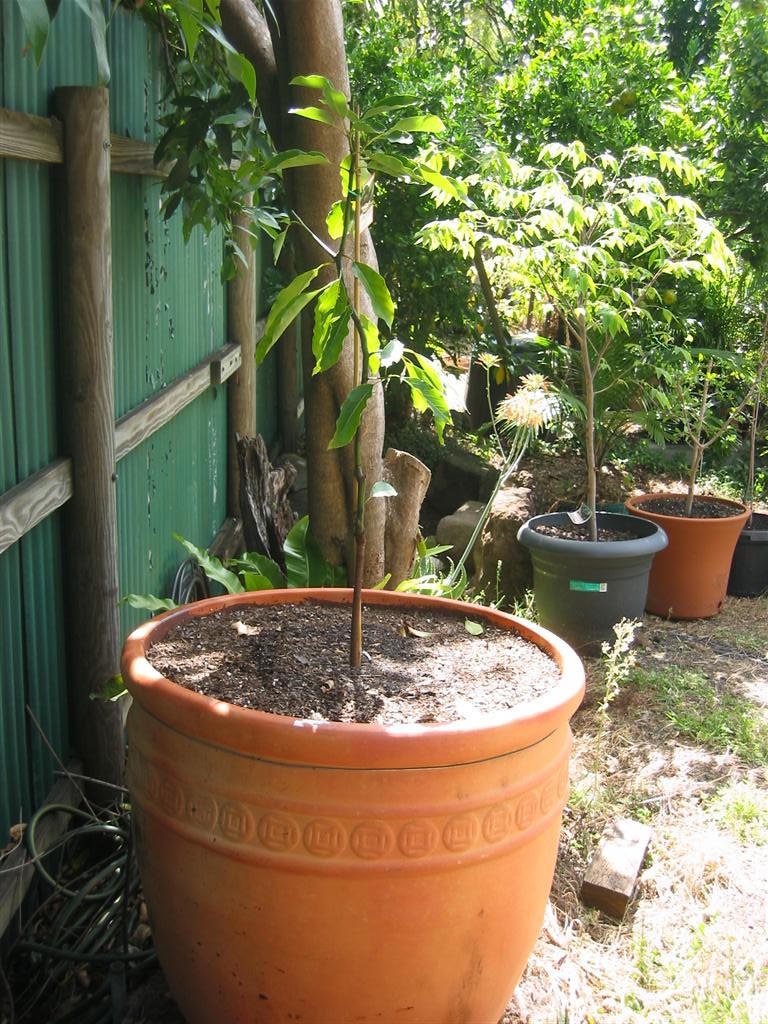
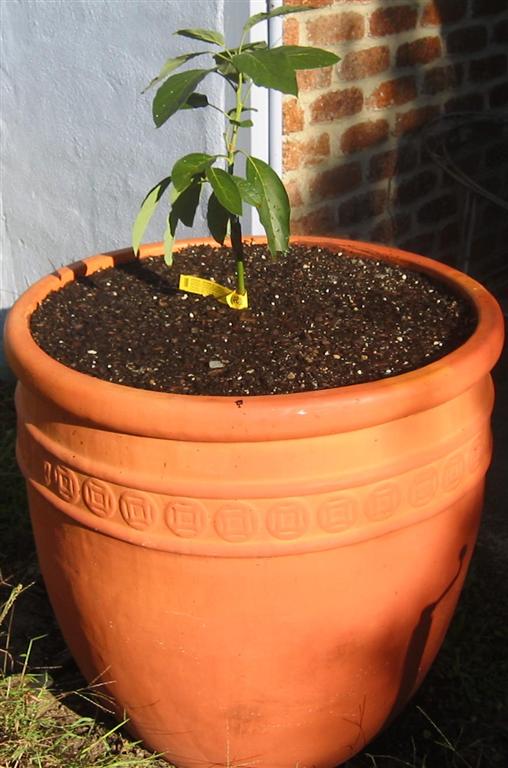
Now I mentioned that they are "fuss pots" and that is why I am not just using any pot but the King of all pots so I can give their root system maximum drainage and room to spread it's roots. Avocados like water going past their roots but it can be fatal if their roots are immersed in water.
The Secondo which is a staff favourite at Daleys is pictured above. I am also growing in an identical pot the Wurtz Dwarf Avocado Tree (very top photo). My bet is that the Secondo will out perform the Wurtz so I think it is a good controlled test. The Secondo and Wurtz are both A-Type varieties and although the Secondo is known to set fruit with no other B-Type avocado in sight you can get an even bigger crop by growing B-Type avocado close by. My choice will be the Sharwill over the Fuete because the Fuete sometimes fruits every second year and the Sharwill every year. The Sharwill usually is flowering when the Secondo is which should enourage good pollination.

My other choice of Avocado which I won't be growing but will someday is the Reed Avocado which is out of this world in size. You could fit 3 Hass avocados inside one Reed and the taste although a little different is still just as good I think.

Avocado Ripening Tip: Place it in a paper bag with a banana or apple and it will ripen quicker.

Another point is that avocado varities don't all ripen at the same time. And like mandarine trees for example where you get early, mid and late varieties by getting a few different varitites of avocados growing you can have avocados ripening for most of the year and what could be better than that? I guess after just planting these avocados I am a bit obssessed with them at the moment.